The Problem With Cookie-Cutter IEP Goals
Every year, millions of IEP goals get copy-pasted from goal banks just like this one. The school fills in your child's name, slaps on "80% accuracy in 4 out of 5 trials," and calls it individualized. It's not.
Under IDEA §300.320(a)(2), every goal must be based on your child's present levels of academic achievement and functional performance — their unique strengths, their specific barriers, their actual evaluation data. Not a template.
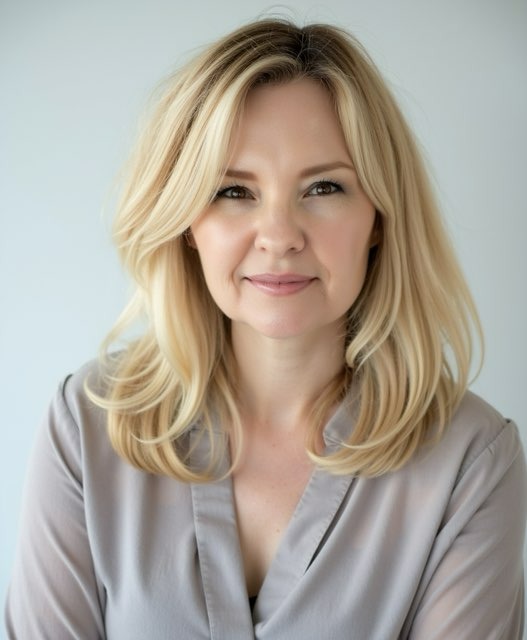
"I've sat at over 500 IEP tables."
I'm Mary, a Special Education Advocate and the founder of The Advocate Ally. I created this goal bank because I was tired of seeing parents bullied into accepting generic, "cookie-cutter" IEPs.
The goals below aren't just random suggestions—they are the exact same forensically sound goals I fight for in meetings every day. Use them to demand better for your child.
Mary
Founder, The Advocate Ally

How Dyslexia Affects Reading Comprehension at the Middle School (6th–8th Grade) Level
Middle school introduces a fundamentally different structure: multiple teachers, rotating classes, heavier homework loads, and increased social pressure. Executive functioning demands skyrocket. Students with disabilities need IEP goals that explicitly teach the organizational, self-advocacy, and self-regulation skills that neurotypical peers may develop naturally. This is NOT the time to reduce services.
The Specific Barrier
Dyslexia creates a fundamental bottleneck: so much cognitive energy goes toward decoding individual words that comprehension of the overall text suffers. This 'double deficit' means students may understand complex ideas when hearing them but fail to demonstrate that understanding when required to read.
Building on Your Child's Strengths
Students with dyslexia often have strong listening comprehension, creative thinking, and big-picture reasoning. Audiobooks, text-to-speech, and read-aloud accommodations allow these strengths to show. Goals should measure comprehension of content — not reading speed.
What Goals Should Actually Address
Applying learned decoding strategies to access grade-level text, demonstrating comprehension through multiple modalities (oral, visual, written with assistive technology), and using text-to-speech tools independently to access content.
⚡ But here's the thing: The information above is general. Your child isn't a category — they're an individual with specific evaluation data, specific classroom challenges, and specific strengths that no goal bank can capture. That's why we built a tool that analyzes your child's actual IEP.
Get your child's IEP reviewed freeRed Flags: Your Child's Reading Comprehension Goals May Be Generic If...
The goal says "80% accuracy in 4 out of 5 trials"
This is the #1 sign of a copy-paste goal. Real criteria should match your child's baseline data, not a boilerplate number.
✕The same goals from elementary school copied into the middle school IEP with no developmental progression
💬 What to say in the meeting:
"Say: 'These goals were appropriate for elementary school. My child is now in middle school with different demands. Can we write goals that reflect the organizational, self-advocacy, and academic complexity of this level?'"
Want this checked automatically? Our audit catches developmentally inappropriate goals and suggests grade-aligned alternatives.
Run a free audit✕No self-advocacy or executive function goals despite multiple teachers and rotating schedules
💬 What to say in the meeting:
"Ask: 'My child now has 6-7 teachers instead of one. Where are the goals that teach them to manage materials, track assignments, and communicate needs to different adults?'"
Want this checked automatically? We specifically check for executive function and self-advocacy goals in middle school IEPs — their absence is a major compliance gap.
Run a free audit✕The school says your child should 'learn to be more independent' without teaching HOW
💬 What to say in the meeting:
"Say: 'Independence is a skill that must be explicitly taught — especially for students with disabilities. What specific instruction is being provided to build independence? A goal to 'be more independent' without teaching strategies is not a real goal.'"
Want this checked automatically? Our audit identifies vague 'independence' goals and recommends specific, teachable skill targets.
Run a free audit✕Behavioral goals that focus on punishment (detention, suspension) rather than teaching replacement behaviors
💬 What to say in the meeting:
"Say: 'Detention doesn't teach new skills. I'd like goals that identify the function of the behavior and teach a replacement strategy. Has a Functional Behavior Assessment been completed?'"
Want this checked automatically? We check whether behavioral goals include replacement behaviors and whether an FBA supports the interventions being used.
Run a free auditAdvocate Tip for Middle School (6th–8th Grade) Parents
Middle school is where many students with disabilities 'fall off the cliff' academically. If your child was doing well in elementary with support, don't let the school use that success as a reason to cut services. The demands have increased — so the support should too, not decrease.
What Reading Comprehension Goal Patterns Look Like at This Level
These are example patterns to help you understand what the school should be writing — not goals to copy. Your child's goals must be built from their evaluation data.
⚠️ These are not your child's goals. Every child with Dyslexia is different. A goal that's right for one 8th Grade student may be completely wrong for another. Use these to understand the structure of a good goal — then make sure your child's IEP team writes goals tied to their specific present levels.
- Example Pattern 1
Analyze how an author develops a theme across multiple chapters using cited text evidence
What a school might write: "The student will analyze how an author develops a theme across multiple chapters using cited text evidence with 80% accuracy in 4/5 trials."
What your advocate should ask: "What's the baseline? Where is analyze how an documented in the present levels? How was 80% chosen as the target?"
- Example Pattern 2
Compare and contrast the presentation of events in two different accounts of the same topic
What a school might write: "The student will compare and contrast the presentation of events in two different accounts of the same topic with 80% accuracy in 4/5 trials."
What your advocate should ask: "What's the baseline? Where is compare and contrast documented in the present levels? How was 80% chosen as the target?"
- Example Pattern 3
Evaluate the strength of an author's argument by identifying claims, evidence, and reasoning
What a school might write: "The student will evaluate the strength of an author's argument by identifying claims, evidence, and reasoning with 80% accuracy in 4/5 trials."
What your advocate should ask: "What's the baseline? Where is evaluate the strength documented in the present levels? How was 80% chosen as the target?"
- Example Pattern 4
Determine the connotative meaning of words and phrases as used in grade-level literary text
What a school might write: "The student will determine the connotative meaning of words and phrases as used in grade-level literary text with 80% accuracy in 4/5 trials."
What your advocate should ask: "What's the baseline? Where is determine the connotative documented in the present levels? How was 80% chosen as the target?"
- Example Pattern 5
Trace the development of a central idea across an informational article, identifying how it is shaped by specific details
What a school might write: "The student will trace the development of a central idea across an informational article, identifying how it is shaped by specific details with 80% accuracy in 4/5 trials."
What your advocate should ask: "What's the baseline? Where is trace the development documented in the present levels? How was 80% chosen as the target?"
5 more goal patterns are available for this combination. But remember — the right number of goals for your child depends on their evaluation, not on how many a goal bank lists.
Show More Goal Patterns
- Pattern 6
Analyze how a particular sentence or paragraph fits into the overall structure of a text
- Pattern 7
Identify instances of bias or misleading information in media and nonfiction sources
- Pattern 8
Synthesize information from two or more texts to write a coherent summary on a shared topic
- Pattern 9
Explain how figurative language (metaphor, simile, personification) contributes to meaning and tone
- Pattern 10
Self-monitor comprehension by identifying when understanding breaks down and applying a fix-up strategy
The Real Question Isn't "What Goals Should I Copy?"
It's: "Are the goals already in my child's IEP actually individualized — or did the school copy them from a bank just like this one?"
I check every goal in your child's IEP against federal standards. I catch the copy-paste goals, the missing present levels, the goals with no real criteria — all the things a goal bank can't tell you.
Audit Your Child's IEP — FreeAccommodations to Discuss With Your IEP Team
These are commonly considered for students with Dyslexia. Like goals, accommodations must be individualized — not selected from a checklist.
What To Do Right Now
- 1
Pull out your child's current IEP
Find the document the school gave you. Look for the section called 'Measurable Annual Goals.'
- 2
Find the Reading Comprehension goals
Look for goals that specifically address reading comprehension. Does the goal reference YOUR child's evaluation data?
- 3
Check for baseline data
Every goal must state where your child IS right now. If there's no number or specific skill level, the goal can't be measured.
- 4
Look for red flags
Compare the goals to the red flags listed above. If you see '80% accuracy in 4 out of 5 trials' or goals that sound like they could apply to any student, flag it.
- 5
Upload for a free professional review
Still not sure? Upload the IEP and I'll check every goal against IDEA standards — automatically.
100% Private & Secure • Takes 2 Minutes
See Reading Comprehension Goal Patterns for Other Grade Levels
Goal expectations differ significantly by developmental level.
Reading Comprehension Goal Patterns for Other Disabilities
Different disabilities create different barriers. Explore what goals should look like for each.